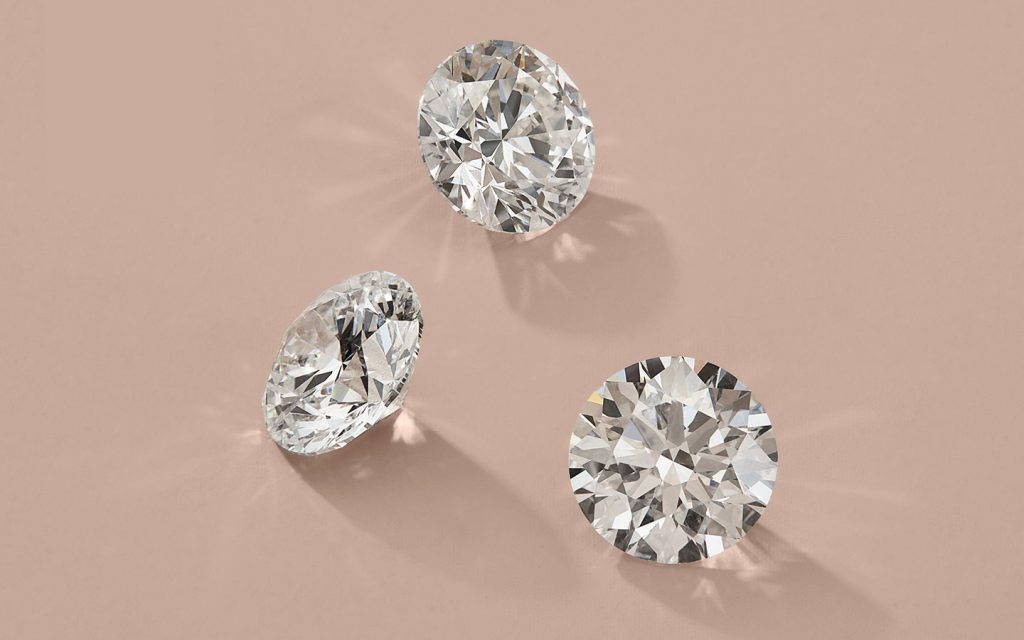
A brilliant stone can look impressive in a jewelry display, but its real character becomes clearer under everyday lighting. Diamond vs moissanites may appear similar at first glance, yet they reflect light differently, have distinct physical properties, and come with different buying considerations.
For someone selecting an engagement ring, those differences matter. A gemstone should suit the intended design, daily routine, and available budget.
The diamond vs moissanite comparison becomes especially useful when buyers understand what they are paying for rather than judging a stone by sparkle alone.
Two Gemstones That Look Similar but Are Not the Same
Diamond consists of crystallized carbon. Natural diamonds form underground, while laboratory-grown diamonds are produced using controlled technological processes. Both have essentially the same chemical composition and crystal structure.
Moissanite is silicon carbide, a separate gemstone containing silicon and carbon. Although natural moissanite exists, the material used in modern jewelry is generally laboratory-created.
Their main differences include:
| Feature | Diamond | Moissanite |
|---|---|---|
| Composition | Carbon | Silicon carbide |
| Mohs hardness | 10 | Approximately 9.25 |
| Sparkle | Balanced white and colored flashes | Stronger rainbow-colored flashes |
| Origin | Natural or laboratory-grown | Usually laboratory-created |
| Typical price | Higher, depending on origin and quality | Generally lower |
| Optical behavior | Single refraction | Double refraction |
Neither gemstone should be confused with cubic zirconia, which has different properties and generally offers less scratch resistance.
The Difference Becomes Clearer Under Bright Lighting
Sparkle is often the first feature buyers notice, but brightness and colored flashes are different optical effects.
Diamonds produce brilliance through white-light reflections, along with smaller flashes of spectral colors called fire. A well-cut diamond balances these effects with contrast between bright and dark facets.
Moissanite has higher light dispersion. This means it separates white light into rainbow colors more strongly.
Under direct sunlight or concentrated jewelry lighting, a large moissanite can produce noticeably stronger colored flashes.
Some buyers enjoy this lively appearance. Others prefer the sharper contrast and relatively restrained fire of a diamond.
Gemstone size also affects perception. In smaller earrings, differences can be difficult to notice without close inspection. In a larger solitaire engagement ring, the contrast may become easier to recognize.
Comparing both stones under daylight, indoor lighting, and softer evening light gives buyers a more realistic impression than showroom spotlights alone.
Does Diamond Offer Better Everyday Durability?
Diamond ranks 10 on the Mohs hardness scale, while moissanite typically measures approximately 9.25.
Both are highly resistant to everyday scratching, making them suitable for rings worn frequently.
However, hardness measures resistance to scratches, not complete resistance to damage. Diamonds can still chip after an unfortunate impact, particularly around exposed points or vulnerable edges.
Moissanite is also durable, but neither material removes the need for careful handling.
The setting matters as much as the stone’s hardness. A raised solitaire may catch on clothing or experience more accidental knocks than a lower-profile design.
People who work regularly with their hands should consider protective settings and remove delicate rings during activities involving heavy impact.
Routine inspection of prongs is useful regardless of gemstone choice.
Why Carat Weight Can Mislead Buyers
One detail frequently overlooked during gemstone comparisons is the difference between carat weight and physical dimensions.
Carat measures weight, not visible size.
Moissanite is less dense than diamond. Consequently, two stones with the same diameter will not have identical carat weights.
A moissanite advertised using a diamond-equivalent carat size may appear similar in diameter to the corresponding diamond while weighing less.
For accurate comparisons, check the measurements in millimeters.
This becomes especially useful when comparing oval, pear, and emerald-cut stones, where length-to-width proportions can affect apparent size.
For engagement rings, a slightly smaller, well-proportioned center stone may create a more balanced design than a larger stone crowded by the setting.
Lab-Grown Diamonds Add Another Option
The comparison is no longer limited to mined diamonds and moissanite.
Laboratory-grown diamonds offer the same essential diamond properties as natural diamonds, including hardness, crystal structure, and optical behavior.
They are genuine diamonds, not diamond substitutes.
This distinction matters because buyers sometimes assume moissanite and laboratory-grown diamonds are interchangeable simply because both can be manufactured.
They are different materials.
For shoppers in Spain considering man made diamonds, Novita Diamonds provides a relevant reference for exploring laboratory-grown diamond engagement-ring designs and comparing their appearance with moissanite alternatives.
A laboratory-grown diamond may appeal to someone who wants genuine diamond optics without choosing a mined stone. Moissanite remains a separate option for buyers who prefer stronger rainbow fire and a generally lower purchase price.
Ring Design Can Change Which Stone Looks Better
The same gemstone can create a different impression depending on its cut and setting.
Round brilliant moissanite emphasizes its colorful flashes, making it suitable for buyers who enjoy pronounced sparkle.
Elongated shapes require closer attention. In some moissanite cuts, double refraction can make facet reflections appear slightly doubled, particularly under magnification.
Diamonds behave differently because they are singly refractive.
Metal color also influences the overall appearance. White gold and platinum create a cool-toned setting, while yellow and rose gold introduce warmth around the center stone.
For a modern solitaire, compare how the gemstone looks against the selected metal rather than viewing loose stones alone.
A bezel setting can provide greater edge protection, while traditional prongs expose more of the stone to light and view.
Buyers planning to wear a wedding band beside the engagement ring should also check how the two rings sit together. High-set center stones, hidden halos, and decorative baskets can affect band compatibility.
Documentation Should Match the Gemstone
Independent documentation is particularly valuable when purchasing diamonds.
An established gemological laboratory, such as IGI, can provide reports describing a diamond’s origin and quality characteristics, including relevant color, clarity, weight, and cut information.
The report should explicitly identify a laboratory-grown diamond as such.
Moissanite documentation is different. Retailer or manufacturer certificates may describe its characteristics, but these should not automatically be treated as equivalent to independent diamond grading reports.
Before ordering, buyers should confirm the gemstone identity, measurements, applicable grading information, and any available report number.
A reliable seller should explain exactly what the documentation establishes.
Before Ordering Jewelry in Spain
Online jewelry purchases deserve the same attention as an in-person appointment.
Ask for clear images or videos of the actual center stone when available, particularly for elongated cuts where proportions influence appearance.
Check whether the listed price includes the complete ring, which metal purity is specified, and whether resizing is available.
Buyers should also review insured delivery arrangements, return conditions, and any exclusions for customized jewelry.
For engagement rings, confirm the intended ring size before commissioning a made-to-order design. Resizing can be complicated by full-eternity bands, extensive pavé work, or delicate settings.
The most useful final comparison is between two complete rings with similar visible stone dimensions and appropriate metal quality, rather than loose stones with matching advertised carat figures.
That reveals how much of the budget is going toward the center gemstone, craftsmanship, setting, and long-term practicality.